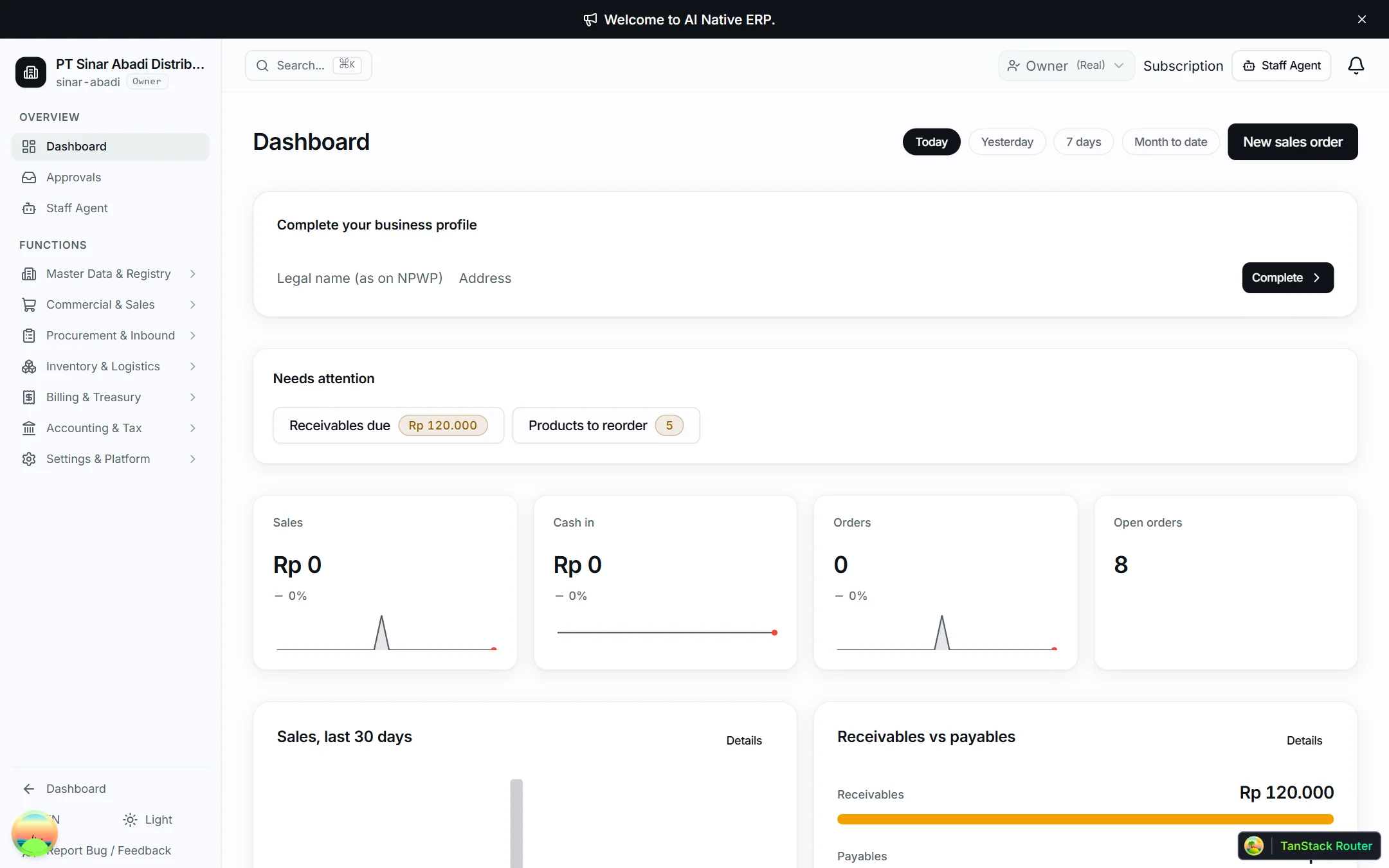
The problem
Small distributors in Indonesia take orders over chat, track stock in spreadsheets that disagree with each other, and reconcile invoices days late.
A conventional ERP keeps the records straight, but it turns every order into a long form that sales staff rarely have time to complete.
What I decided
- 01
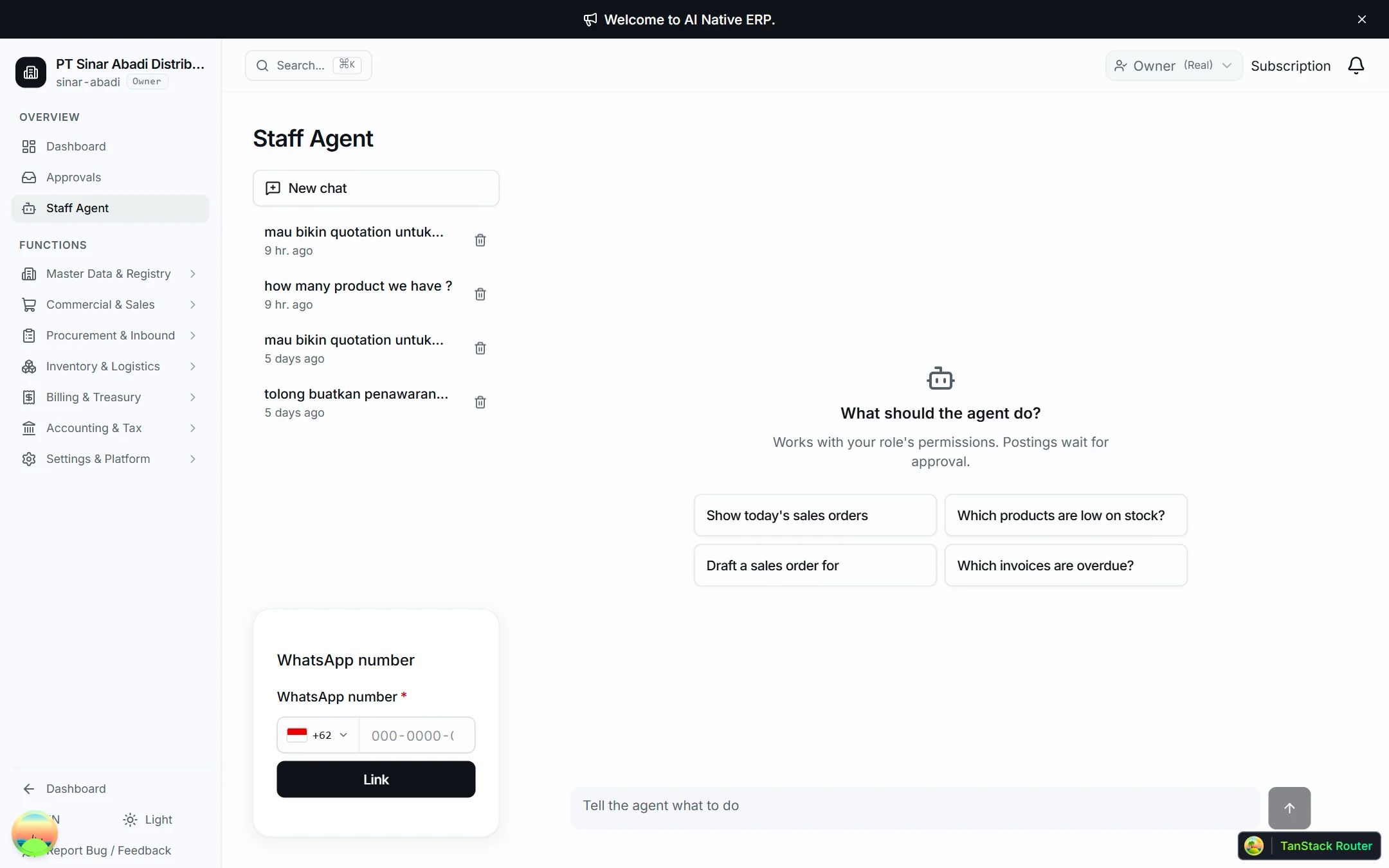
The agent drafts, a person approves
A plain-language request becomes a structured order draft. It stays a draft until someone with the right role approves it, so the agent never posts to the books on its own.
- 02
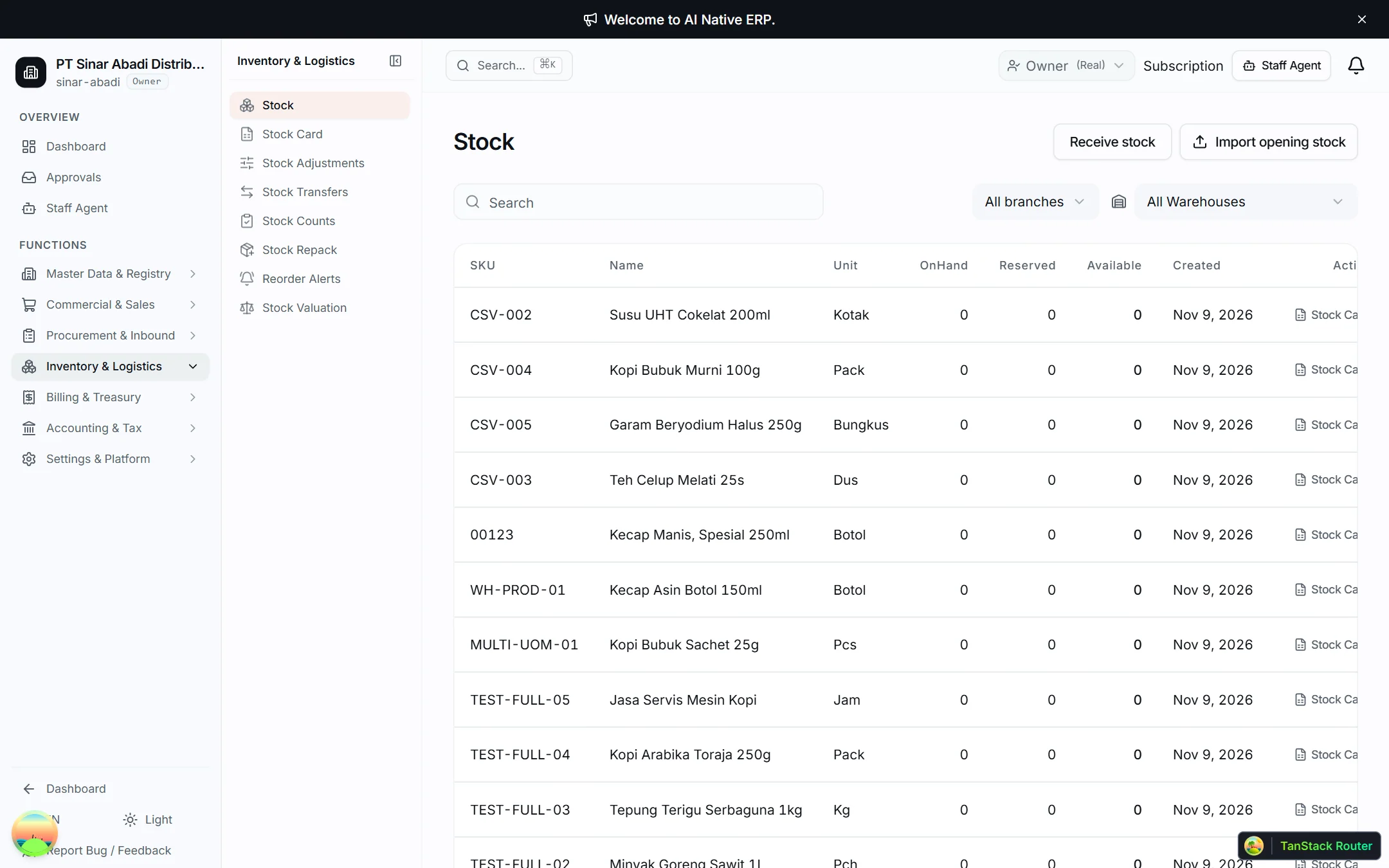
Stock as a ledger of movements
Every movement of goods is recorded as its own entry, so any stock figure can be traced to the receipts, deliveries and adjustments behind it.
- 03
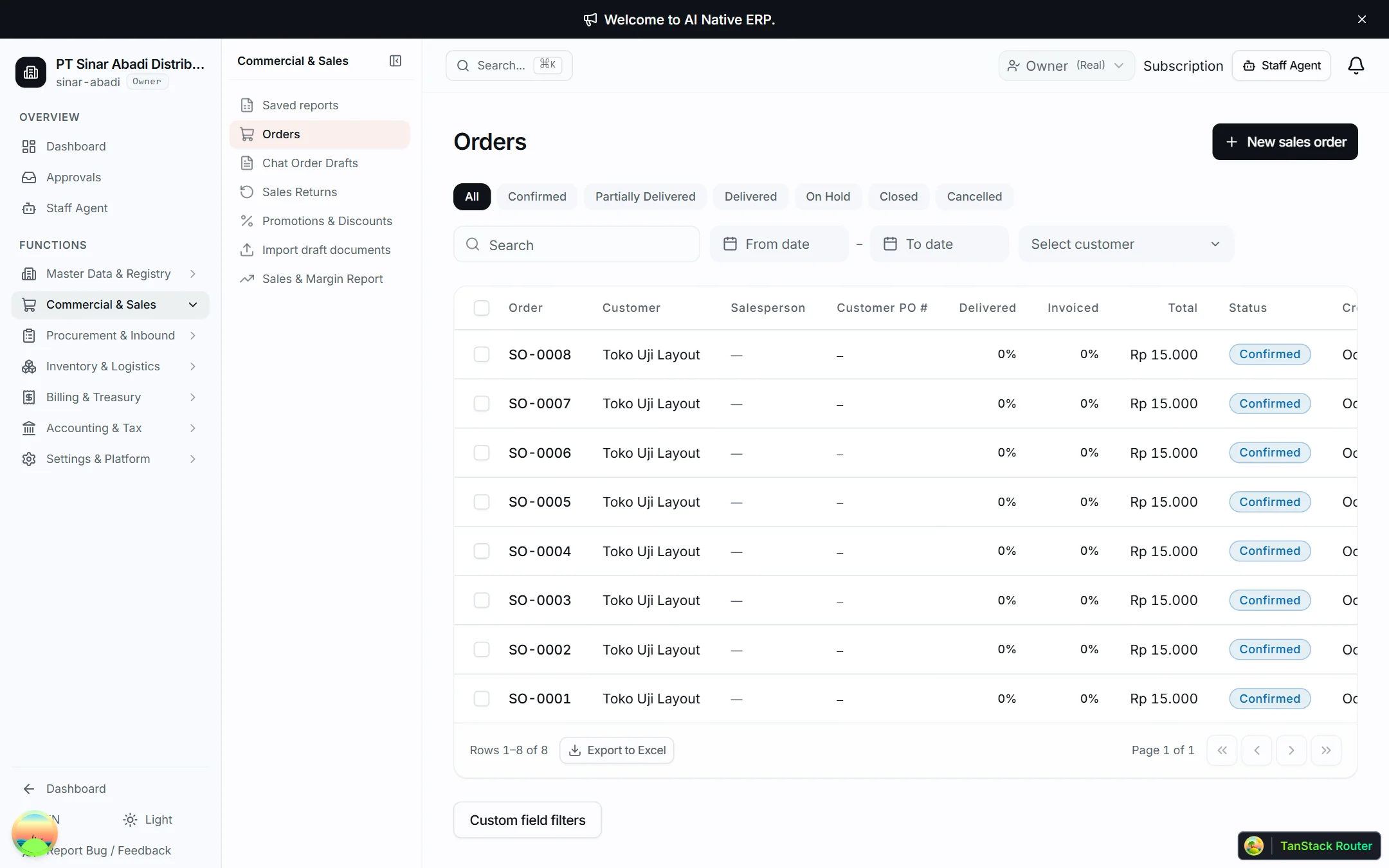
Menus and approvals by role
Owners, sales staff and warehouse staff see different menus and actions, and each approval waits for the role allowed to grant it.
On screen
Gositus AIAI customer support
Read case study